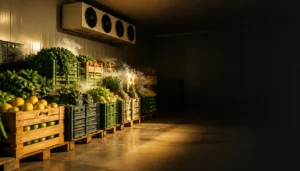
Unlike boxed manufactured goods, fresh fruits and vegetables are alive, breathing, and generating energy inside your warehouse. When managing an agricultural cold chain, you cannot treat fresh produce like inert cargo, or you risk devastating inventory losses. Business owners and warehouse managers must account for the natural internal warmth generated by crops using a reliable postharvest product heat load calculation table. Failing to plan for this biological energy can easily overwhelm your refrigeration system, cause rapid product softening, and lead to early spoilage. This guide breaks down how to manage these fresh produce respiration heat metrics in simple, human terms so you can protect your crop quality and keep your cooling costs under control.
What is Vital Heat? The Biology of Living Produce After Harvest
When a crop is harvested from the field, it is cut off from its source of water and nutrients, but its biological processes do not stop. Fresh fruits and vegetables continue to breathe to stay alive. During this natural process, the produce consumes oxygen and breaks down its stored sugars and starches. This cellular breakdown releases carbon dioxide, water vapor, and a continuous stream of internal biological warmth known as fruit vital heat output.
The speed of this breathing process directly dictates the biological deterioration rate of your inventory. If you store a high-respiration crop at room temperature, it will breathe rapidly, heating itself up from the inside out and accelerating its own aging process. This self-heating behavior creates localized warm pockets inside your storage crates, causing the surrounding food to over-ripen, lose moisture, and turn soft within days. To stop this degradation, your cooling system must be sized to continuously sweep away this living heat as fast as the plants release it.
Key Takeaway: Fresh produce never stops breathing after harvest. It actively generates internal biological warmth that will heat up your storage room and spoil your inventory early if your refrigeration system isn’t designed to remove it.
Field Heat vs. Respiration: The Two Parts of Cargo Heat Load
When calculating the total refrigeration capacity needed for agricultural inventory, you must break the incoming cargo load into two separate components. Warehouse operators often make the mistake of looking only at the final storage temperature, ignoring the massive thermal energy spike that occurs during the initial loading phase. To protect your inventory, your system must handle both initial cooling demands and ongoing biological maintenance.
The first component is known as field heat. This is the high sensible warmth that the crop carries inside its tissues directly from the outdoor fields and transport trucks. Removing this initial warmth requires an intensive crop cooling pull-down load period. Your compressor must have enough horsepower to quickly drop the temperature of the incoming produce—often from an outdoor ambient $30^\circ\text{C}$ down to a safe storage baseline—within a specific number of hours.
[Total Cargo Heat Load]
├── 1. Field Heat (High initial warmth from the field; requires rapid pull-down power)
└── 2. Respiration Heat (Continuous biological warmth generated 24/7 once cooled)
The second component involves your long-term postharvest thermal storage metrics: the constant respiration heat. Once the crop reaches its ideal holding temperature, it continues to generate biological warmth 24 hours a day. While this maintenance load is lower than the initial pull-down spike, it represents a permanent, daily demand on your cooling system that never goes away until the room is emptied. To see how these living cargo variables blend with your facility’s structural parameters, read our foundational guide: A Simple Guide to Cold Storage Heat Load Calculations.
Key Takeaway: Cargo load is a two-step challenge. Your system needs heavy initial pull-down power to strip away hot field heat, followed by steady, reliable capacity to neutralize the continuous respiration heat generated by the living crops.
The Postharvest Product Heat Load Calculation Table
Respiration rates change drastically based on two main factors: the specific crop variety and the temperature inside your storage space. Cooler temperatures naturally slow down a plant’s breathing rate. This slowing down reduces the biological energy output and directly extends the shelf life of your inventory.
The reference matrix below outlines the typical fruit vital heat output and vegetable respiration trends across common storage conditions. This data gives operators an immediate reference tool to see how different cargo selections alter your overall postharvest thermal storage metrics:
| Crop Category | Sample Commodity | Respiration Rate at 0∘C (Watts per Metric Ton) | Respiration Rate at 10∘C (Watts per Metric Ton) | Relative Respiration & Sizing Risk |
| Very Low | Potatoes, Garlic, Onions | 5 – 10 W/t | 15 – 25 W/t | Minimal: Requires standard maintenance cooling. |
| Low | Apples, Pears, Grapes | 10 – 15 W/t | 30 – 50 W/t | Low: Stable storage needs; predictable load factors. |
| Moderate | Tomatoes, Mangoes, Citrus | 20 – 30 W/t | 60 – 110 W/t | Medium: Requires reliable, steady airflow management. |
| High | Cauliflower, Cabbage, Lettuce | 35 – 60 W/t | 120 – 210 W/t | High: Spikes quickly if entry temperatures are high. |
| Very High | Spinach, Broccoli, Asparagus | 80 – 130 W/t | 280 – 450 W/t | Critical: Demands intensive airflow and rapid cooling. |
As this postharvest product heat load calculation table shows, trying to store a high-respiration crop like spinach at a warm $10^\circ\text{C}$ forces your cooling equipment to handle nearly four times the thermal energy output compared to holding it at $0^\circ\text{C}$. This data highlights why keeping precise temperature control is vital for managing your energy budget.
Key Takeaway: Cooling a room down directly slows down crop breathing. High-respiration vegetables release massive amounts of biological heat if they are allowed to warm up, which requires a much larger refrigeration system to control.
Airflow and Circulation: Defeating Biological Heat Gas Pockets
Providing cold air to a room is only half the battle; that air must physically reach the center of your inventory to keep it stable. When storing living items that release fresh produce respiration heat, poor warehouse layouts easily create stagnant air pockets. If pallets or wooden crates are jammed too tightly together, the cold air from your evaporators will simply flow over the top of the pile, completely missing the inventory buried in the middle.
This lack of movement creates restricted zones where vital heat and trapped gases cannot escape. As temperature and carbon dioxide build up inside these tight stacks, the inner crops begin to sweat and decompose. To fix this issue, you must establish proper cold room airflow circulation by following a few simple space rules:
[Proper Airflow Alignment]
Evaporator Fan Blast ──> 10cm Wall Gap ──> [Pallet] ──> 5cm Space ──> [Pallet] ──> Return Air Path
- Maintain a 10cm Wall Buffer: Never stack crates directly against your insulated panels. Leaving a clear gap allows cold air to sweep down the walls and underneath your pallets.
- Leave Gaps Between Pallet Rows: Keep a clear 5cm space between adjacent pallet lines so air can pass sideways through the vents in your plastic storage boxes.
- Clear the Evaporator Path: Never pile boxes directly beneath your cooling units, as this blocks the return airflow path and cuts your system’s overall efficiency.
Key Takeaway: Stacking crates too tightly traps heat and gases inside your inventory, cooking the center items. Leaving clear gaps along walls and between pallets allows fans to sweep away biological heat cleanly.
Section complete. Should I write the next section?
How to Keep Fresh Produce from Spoiling: Smart Sizing Tips
To prevent your living inventory from softening and losing market value, your facility setup must be matched to your specific cargo profiles. Relying on guesswork can easily overload your equipment. If you regularly bring in high-respiration local crops during hot weather, implementing three straightforward operational habits will drastically reduce your crop cooling pull-down load and keep your compressor healthy:
- Pre-Cool Your Cargo First: Never load hot, freshly picked field crops directly into your long-term holding room. Using a dedicated pre-cooling bay or a blast chiller strips away the heavy initial field heat rapidly, preventing your main room from experiencing temperature spikes.
- Never Mix Incompatible Commodities: Stacking high-respiration fruits next to sensitive items is a recipe for early spoilage. High-breathing items release elevated levels of moisture and natural ripening gases that will cause neighboring lower-respiration crops to decay.
- Protect Your Entryway Boundaries: Every time a loading door is left open, incoming humidity mixes with your crop’s natural moisture, forming a thick layer of ice on your cooling fins. Keeping your entryway boundaries sealed prevents this extra stress. To see how to stop these external drafts from compounding your product heat load, check out our companion guide: Calculating Air Infiltration Heat Load via Cold Room Door Cycles.
Key Takeaway: Pre-cooling warm field crops before long-term storage drastically reduces the strain on your compressor. Keeping your doors shut and separating high-respiration varieties will keep your room temperatures stable and extend product shelf life.
Section complete. Should I write the next section?
Frequently Asked Questions About Crop Heat Load
Why do fresh vegetables release heat in cold storage?
Fresh vegetables release heat because they are living organisms that continue to breathe after being harvested. To stay alive, their cells consume oxygen and break down stored sugars. This natural biological process releases carbon dioxide, moisture, and internal heat energy into the surrounding air.
What happens if you stack produce pallets too close together?
Stacking produce pallets too close together blocks necessary airflow and creates stagnant air pockets. The natural biological heat and carbon dioxide released by the crops get trapped inside the dense stacks. This trapped warmth raises the core temperature of the pile, causing the center produce to sweat, soften, and rot early.