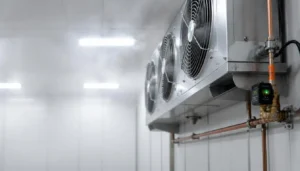
Many building owners assume an industrial cold room is just an oversized commercial refrigerator or a standard room fitted with a powerful air conditioner. In reality, maintaining a flawless sub-zero or chilled environment requires a tightly engineered system of matching mechanical parts and thermal barriers. This comprehensive cold room components and hardware guide moves past basic descriptions to look at how distinct thermodynamic loops and physical structural elements interact. Balancing these factors is the only way to protect your inventory, lower energy consumption, and ensure long-term operational reliability.
The Mechanical Heart: Sizing and Matching Compressors with Condensing Units
Achieving peak efficiency in precision cooling engineering starts with the vapor compression cycle, specifically where heat is pulled from the room and pushed outside. The compressor acts as the pump for this entire process. Selecting the right compressor profile requires looking closely at your daily cooling loads. While traditional fixed-speed compressors constantly cycle all the way on and all the way off which spikes your energy bills and wears out mechanical parts modern facilities increasingly use inverter refrigeration technology. These variable-frequency drives allow the compressor to slow down or speed up dynamically to match the exact temperature changes inside the room.
For mid-sized commercial cold rooms, hermetic scroll compressors are highly reliable because their orbiting scroll design has fewer moving parts, which minimizes friction and lowers noise. When dealing with massive industrial warehouses, engineers shift to semi-hermetic screw compressors to handle the heavy volume. This pumping capacity must match your heat rejection media on the high-pressure side of the system, where the condenser is located.
If your condenser coil cannot shed heat as quickly as the compressor pumps it, head pressures climb, causing the system to draw excess power. For example, using modern microchannel condensers provides a much larger surface area for heat exchange within a compact footprint. This helps the system reject heat efficiently even during peak summer ambient temperatures.
Key Insight: A compressor cannot run efficiently in isolation. Sizing your machinery based on maximum peak loads while deploying inverter-driven controls ensures your system functions smoothly during part-load conditions, protecting your equipment from premature mechanical wear.
The Evaporation Loop: Maximizing Heat Transfer and Airflow Dynamics
Once refrigerant passes through the outdoor condensing unit, it moves inside to the evaporator assembly, where the actual cooling of the space occurs. Executing a proper cold room components and hardware guide requires looking closely at how air moves across these internal cooling coils. Choosing an incorrect evaporator profile can lead to product dehydration, uneven room temperatures, and excessive power consumption.
The foundation of a reliable system relies on energy efficient evaporator coil selection. If you are storing fresh produce, you need a large coil surface area with a low temperature difference between the refrigerant and the room air. This configuration maintains high relative humidity, preventing your stock from drying out. Conversely, frozen food logistics require deep, multi-row coils configured to manage high sensible heat loads.
The physical environment also dictates your coil design, particularly concerning frost accumulation. As warm, moisture-laden air enters the room during loading cycles, water vapor freezes directly onto the cold evaporator fins. If your fin spacing is too tight such as using a compact 4 mm gap in a sub-zero freezer the space between the fins will plug with ice within hours, blocking airflow and insulating the coils from the room. Freezers require wider fin spacing (typically 8 mm to 12 mm) paired with automated, sensor-driven electric defrost systems to melt ice accumulations before they strangle your air velocity control.
Key Insight: Airflow is just as critical as raw cooling capacity. Ensuring your evaporator fan configuration maintains uniform air velocity across the entire room eliminates hot spots, keeping your stock safe regardless of where it is stacked on the racks.
Precision Metering: Tuning Electronic Expansion Valves (EEVs) for Superheat Control
The physical link between the high-pressure outdoor system and the low-pressure indoor cooling loop is the expansion device. While traditional projects relied on mechanical thermostatic expansion valves (TXVs), modern precision cooling demands a shift toward electronic expansion valve tuning.
A standard mechanical TXV uses a physical bulb and internal spring pressure to adjust refrigerant flow. This mechanical design responds slowly to sudden thermal changes, such as when warm stock is loaded into the room. This slow response time often causes the evaporator to fluctuate between being starved of refrigerant or flooded with liquid.
Switching to an EEV solves this issue by using a microprocessor-controlled micro-stepping motor. By reading real-time temperature and pressure signals at the evaporator outlet, the EEV updates its position within milliseconds, maintaining precise superheat regulation. Tuning your EEV ensures that the maximum amount of evaporator coil surface is actively working to absorb heat without letting unevaporated liquid refrigerant escape down the suction line into the compressor. This steady control directly improves your overall COP optimization, slashing monthly energy draw by keeping the system balanced when outdoor ambient temperatures shift.
Key Insight: Moving from a mechanical valve to an electronic expansion valve acts like upgrading from a carburetor to electronic fuel injection. It gives your system the precision needed to maintain perfect internal temperatures while keeping your energy consumption to a minimum.
Structural Closures: Heavy-Duty Mechanical Hardware Specifications
A refrigeration system can run perfectly, but it will still waste energy if the room’s physical structure fails to seal properly. The entryways of any facility face constant physical wear from daily warehouse traffic. To prevent energy loss, builders must follow strict modular cold room mechanical hardware specs that can withstand heavy impacts while maintaining a tight thermal seal.
The weight of an insulated cold storage door whether it is a hinged swing style or a large automated sliding model places intense stress on its supports. Standard commercial hinges will sag under these loads, causing the door to misalign and break its perimeter seal. Industrial setups require self-lubricating, heavy duty hinges made from high-strength composite materials or stainless steel, paired with integrated cam-lift mechanisms that lift the door slightly during opening to reduce gasket wear.
Safety infrastructure is equally essential. Every walk-in facility must feature glow-in-the-dark internal safety releases on all door latches. This ensures that even if an operator is locked inside, they can exit immediately. To keep these components operating smoothly, regular maintenance is required. If your seals are beginning to degrade or your tracking assemblies show wear, scheduling professional commercial cold room repair can help restore your entryway’s performance before it causes a major energy drain.
Key Insight: Heavy-duty entryway hardware does more than just secure your inventory. Selecting high-grade hinges and automatic track closures keeps your doors aligned, ensuring your perimeter gaskets seal tightly every time the door shuts.
Eliminating Thermal Bridging: Perimeter Vapor Barriers and Anti-Sweep Heaters
Even with a well-aligned door, cold rooms can lose efficiency through a process known as thermal tracking. This occurs when structural metal frames, floor tracks, or latch mechanisms pass entirely from the warm exterior to the sub-zero interior, creating a direct path for heat to enter the room. Addressing this issue is a primary focus of modern thermal bridging prevention strategies.
When heat enters through a thermal bridge, moisture in the air condenses on the cold outer surfaces. In freezers, this condensation turns to solid ice, which can jam doors shut and tear heated door gaskets. To fix this, engineers install low-wattage, self-regulating anti-sweep threshold heaters inside the door frames. These heating wires keep the frame temperature just above the dew point, preventing ice formation without adding extra heat to the room.
Managing open-door air exchange is another critical step. When a large door opens, heavy cold air pours out along the floor, while warm, humid room air rushes in across the top. Installing high-overlap PVC strip curtains or automated air barriers creates a secondary barrier that blocks this air exchange, helping you maintain a stable internal climate. For a detailed breakdown of door insulation ratings and selection metrics, look at our comprehensive Cold Room Doors Guide.
Key Insight: Preventing thermal bridging requires keeping your structural metal components physically separated. Using thermal breaks and self-regulating frame heaters stops condensation from turning into a dangerous, ice-packed energy drain.
The Laws of Balanced Design: System Integration and Component Synchronization
A common engineering mistake is selecting high-end individual parts without considering how they will work together. For true refrigeration system balanced design, your compressor, condenser, evaporator, and expansion device must be sized to operate as a single, coordinated system. If any single component is incorrectly matched, your entire facility will suffer from poor efficiency and premature mechanical failures.
If your evaporator coil is undersized relative to your compressor, the compressor will rapidly pull the suction pressure down too low. This causes the coils to freeze up and starves the compressor of returning refrigerant gas, which can lead to overheating. On the other hand, if your expansion valve is oversized, it will inject too much liquid refrigerant into the evaporator, causing liquid slugging that can destroy your compressor’s internal valves.
To prevent these issues, modern systems use automated climate controls and continuous system diagnostics. These control panels act as the brain of the facility, balancing compressor speeds with electronic expansion valve settings based on active sensor data. Ensuring your entire mechanical setup is synchronized is essential for long-term reliability and helps your building meet technical guidelines. For local operators looking to manage construction costs, aligning your engineering specifications with the NHB subsidy process in Karnataka can help cover a significant portion of your eligible mechanical infrastructure investment.
Key Insight: Peak efficiency is achieved through component balance, not just raw power. When your mechanical loops are properly synchronized, your system runs smoothly under variable loads, reducing energy usage and extending equipment life.
FAQs: Cold Room Component Sizing and Hardware Compatibility
Building or upgrading an industrial cold storage room can leave operators with several immediate, practical questions. Navigating mechanical specifications requires clear, data-driven answers. Below are responses to the most common engineering inquiries regarding hardware selection and system troubleshooting.
How do I calculate total refrigeration transmission load?
Calculating your total transmission load requires evaluating the surface area of your walls, floor, and ceiling, the thermal conductivity (U-factor) of your insulation panels, and the maximum temperature difference between the outside ambient air and your target internal temperature. Engineers use the formula:
This value is then combined with internal heat sources such as lighting, fan motors, forklift operations, and product respiration loads to determine your total required cooling capacity.
When should I choose a water-cooled condenser over an air-cooled one?
Water-cooled condensers are highly effective for large-scale industrial warehouses or in regions with very high summer temperatures, as water transfers heat more efficiently than air. However, they require a continuous water supply and cooling towers. For small to mid-sized commercial cold rooms, air-cooled microchannel condensers are usually preferred because they are easier to maintain and have lower upfront installation costs.
What happens if my expansion valve is oversized?
An oversized expansion valve allows too much liquid refrigerant into the evaporator coil, causing a problem known as “hunting.” The valve will rapidly open and close as it struggles to find stability, leading to wide temperature swings. This can cause liquid refrigerant to flood down the suction line and wash out the compressor’s lubricating oil, which can quickly lead to mechanical failure.
Key Insight: Understanding how your hardware choices interact is the only way to avoid system failures. Sizing components correctly from the start protects your compressor, stabilizes your internal temperatures, and keeps your monthly energy bills predictable.
Visit our Google My Business listing to see our recent custom installations! Call Cold Smith Enterprises Today: +91-9632758132